

SINGLE-LAYER STRUCTURES: Technical Fundamentals
Description
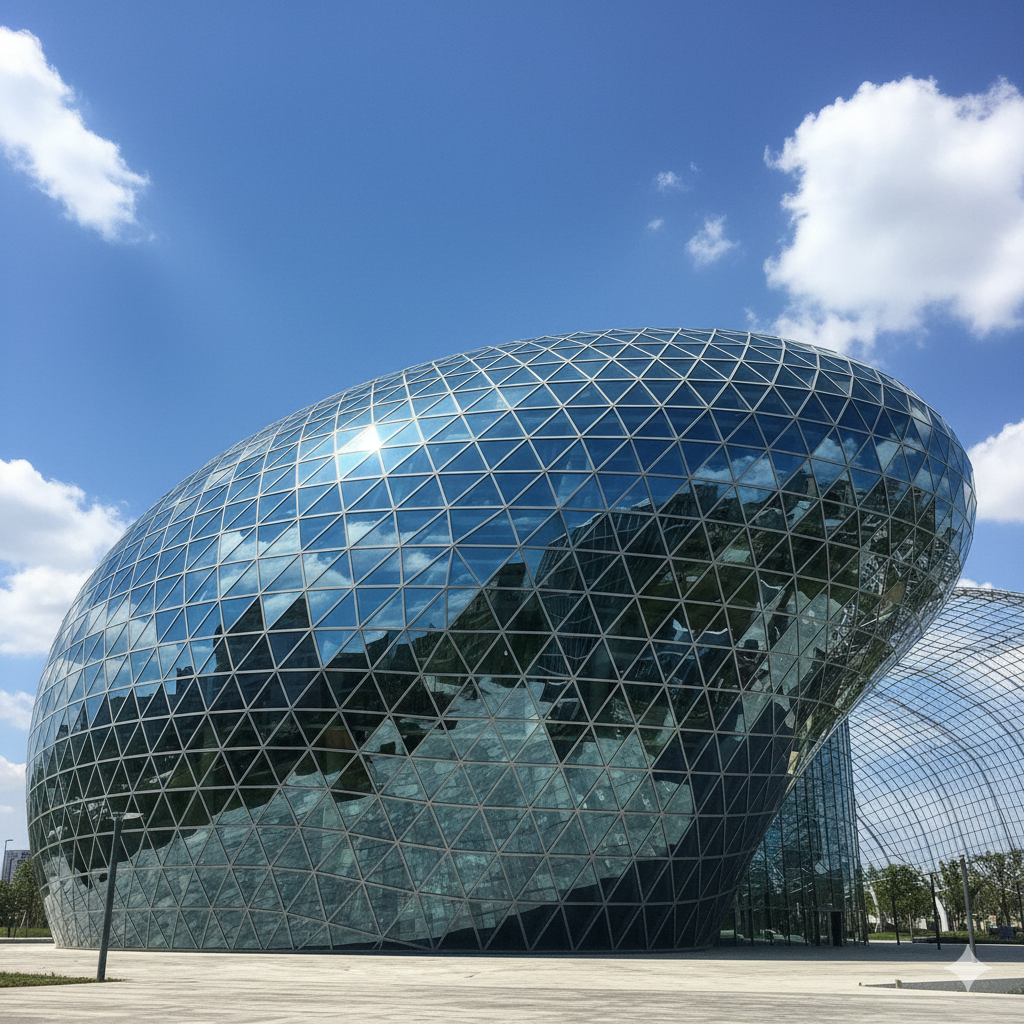
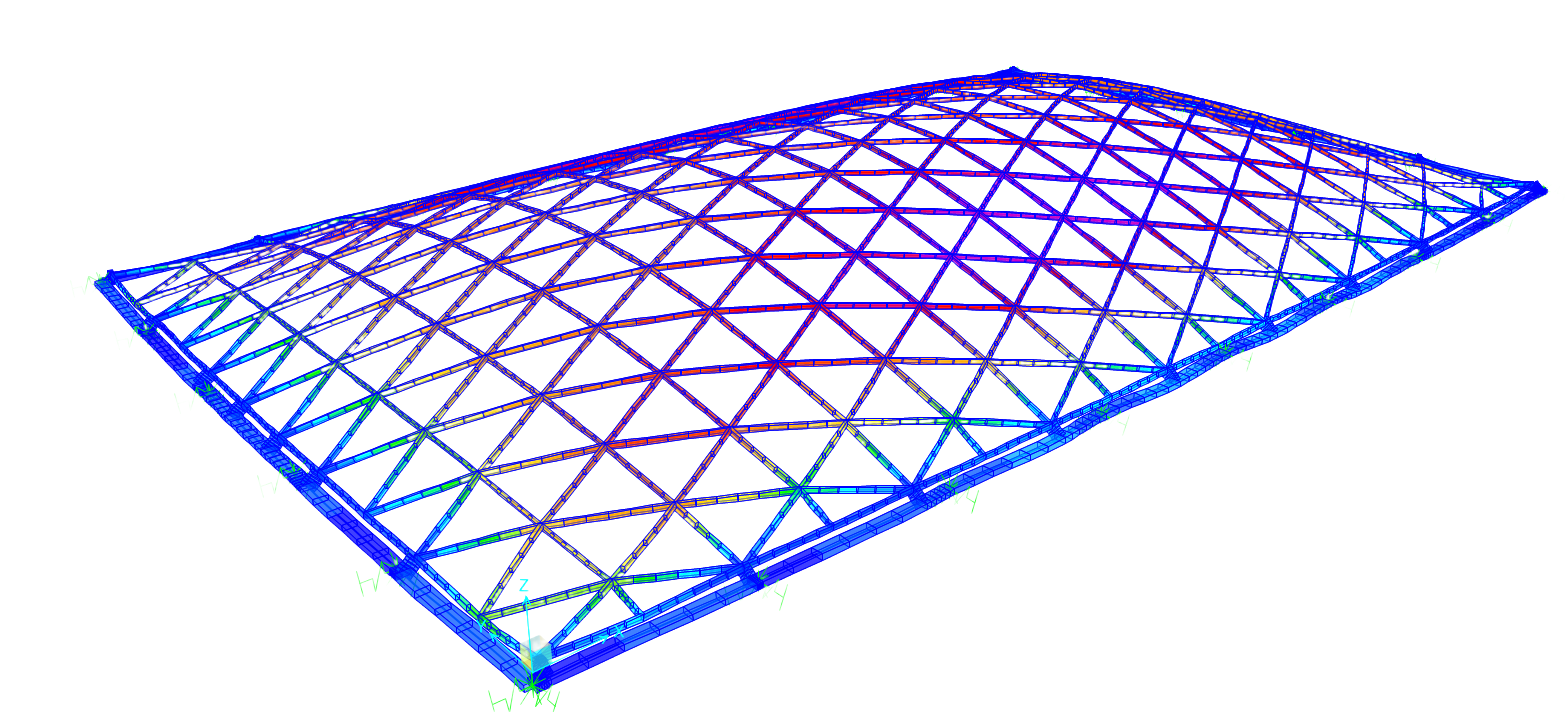
Single-layer structures (membrane, shell or single-layer) are resistant systems of a single structural layer that work mainly by shape, developing membrane stresses and minimizing bending through active geometry.
They should not be confused with tensile structures or textile structures: they are rigid systems that behave like structural shells.
Structural principle
Its efficiency comes from the combination of:
- Doubly curved geometry
- Predominant work due to membrane stresses
- Reduction of bending moments
- Structural activation by form
Common examples:
- Metal domes
- Single-layer covers optimized for glass support
- Shell-type systems with double curvature
Difference between spatial structures and monolayer
Spatial structure
- Primarily flexural behavior
- Red tridimensional
- Secondary geometry for stability
- Reduced sensitivity to imperfections
- Good performance under dynamic loads
Single-layer structure
- Membrane/shell-type behavior
- Active structural surface
- Critical geometry for stability
- High sensitivity to imperfections
- Complex structural behavior

structural advantages
- Maximum efficiency of the structural edge. Visually clear.
- Great capacity to cover low-profile lights, always accompanied by double curvature geometry.
- Natural integration with complex architecture
- High potential for geometric optimization

critical design aspects
- Global and local stability
- Geometric imperfections
- Sensitivity to local and global buckling
- Manufacturing tolerance control
- Need for advanced nonlinear analysis
- Precise assembly control
These structures do not allow for simplified approaches without compromising safety or performance.


Frequently Asked Questions (FAQ)
What is a single-layer structure? It is a strong, single-layer structure that works by its shape, developing membrane stresses similar to those of a structural shell.
How does it differ from a classic spatial structure? The single-layer structure depends critically on its geometry to function structurally; the spatial structure works more through the three-dimensional arrangement of bars.
What calculation tools are required? Geometrically nonlinear analysis, large deformations, stability studies, second-order analysis, and imperfection control.
Are they more efficient than traditional solutions? Structurally, yes. However, they require greater precision in their construction, which adds complexity to the design, manufacturing, and assembly.
Where are these types of structures used? Unique architecture, buildings where the structural form is an essential part of the architectural concept.
urban engineering
Specialized in the analysis and optimization of spatial and single-layer structures
